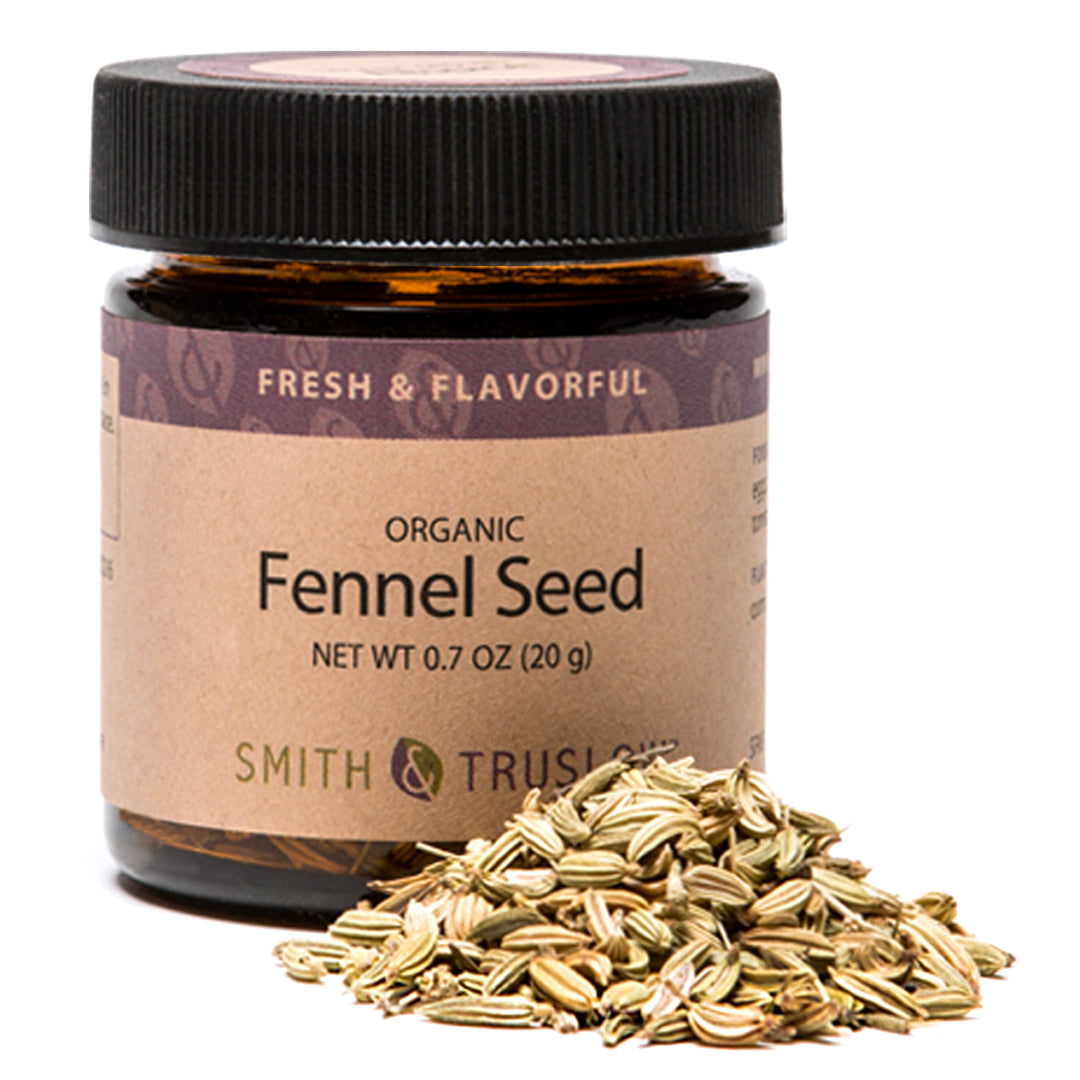
Organic Fennel Seed
Organic Fennel Seed
- Organic
- Gluten Free
- Kosher


This item is free gift eligible
Couldn't load pickup availability
Smith & Truslow Organic Fennel Seeds are USDA certified organic and third-party tested for heavy metals — delivering the sweet, warm, distinctively anise-like, slightly licorice-tinged aromatic flavor that makes fennel seed one of the most versatile, most globally used, and most culinarily essential seeds in Italian, Indian, Middle Eastern, Scandinavian, and American cooking.
Our organic fennel seeds are premium certified organic whole seeds — carefully selected from the finest fennel-growing regions and handled with care to preserve their essential oils, pale green-gray color, and the full spectrum of aromatic compounds that give freshly used fennel seeds their extraordinary sweet, anise-forward complexity. Whether you're building an authentic Italian sausage blend, toasting and adding to an Indian dal, building a classic Chinese five spice powder, seasoning a Sicilian-style roasted fish, building a fennel-spiced pork rub, flavoring a classic French bouillabaisse, adding to a pickling brine, building a Scandinavian aquavit-inspired preparation, making a soothing fennel tea, or simply reaching for the seed that adds a distinctive sweet anise warmth to virtually any savory or sweet preparation, Smith & Truslow organic fennel seeds deliver a freshness, potency, and aromatic complexity that conventional fennel seeds simply cannot match.
What Do Fennel Seeds Taste Like — and Why Are They So Uniquely Versatile?
Fennel seeds are one of the most distinctive and most polarizing-sounding seeds in the culinary world — and one of the most universally loved once a cook understands their true character and versatility. The flavor of fennel seeds is sweet, warm, and anise-like — with a clean, slightly cooling finish and a gentle complexity that includes notes of green herb, slight citrus, and a subtle earthiness that makes them far more nuanced than a simple comparison to licorice suggests. The dominant aromatic compound in fennel seeds is trans-anethole — the same compound responsible for the anise character in star anise, anise seed, and licorice root — but in fennel seeds it is expressed more gently, more warmly, and with more herbal complexity than in any of these other anise-flavored ingredients. This gentler, more approachable anise character is precisely what makes fennel seeds so extraordinarily versatile — they add sweet anise warmth to Italian sausage without overpowering the pork, they add aromatic complexity to Indian spice blends without dominating the other spices, they add subtle sweetness to a fennel tea without the medicinal intensity of star anise. Understanding fennel seeds as a gentle, approachable, warmly complex anise seed — rather than an aggressive licorice flavoring — is the key to unlocking their extraordinary culinary potential.
Fennel Seeds Around the World — A Truly Global Ingredient
Fennel seeds are one of the most globally used culinary seeds in existence — appearing in the cooking traditions of cultures separated by thousands of miles and centuries of culinary development in ways that reveal the universal appeal of their distinctive sweet anise character. In Italy, fennel seeds are the defining flavoring of Italian sausage — particularly the finocchiona of Tuscany and the pork sausage preparations of Calabria and Sicily — where they add the characteristic sweet anise note that makes Italian sausage immediately and unmistakably Italian. In India, fennel seeds — called saunf — are one of the most important culinary spices, used in spice blends, rice preparations, and as a mouth freshener and digestive aid after meals. In Chinese cooking, fennel seeds are one of the five ingredients in Chinese five spice powder — contributing the sweet anise note alongside star anise that gives the blend its characteristic aromatic depth. In the Middle East, fennel seeds appear in spice blends, bread preparations, and the aromatic seasonings of Egyptian, Lebanese, and Persian cooking. In Scandinavia, fennel seeds flavor aquavit — the defining spirit of Scandinavian culture — and appear in rye breads, crackers, and the spiced preparations of Nordic cooking. In the American South, fennel seeds have a long history in sausage making, pickling, and the spiced preparations that define Appalachian and Southern food culture.
Fennel Seeds vs Anise Seeds vs Star Anise — Understanding the Anise Family
Fennel seeds, anise seeds, and star anise are three of the most frequently confused and incorrectly substituted ingredients in the spice world — and while all three share the characteristic anise-like flavor driven by trans-anethole, they are meaningfully different in intensity, complexity, and best application. Fennel seeds deliver a sweet, warm, gentle anise character with herbal complexity and a slight earthiness — the most approachable and versatile of the three, equally at home in savory sausage blends, sweet breads, spice teas, and Indian masalas. Anise seeds deliver a more intensely sweet, more purely anise-focused flavor than fennel — less herbal complexity, more concentrated sweetness — making them the preferred choice for baked goods, liqueurs, and preparations where pure anise sweetness is the goal. Star anise delivers the most intense, most assertive anise character of the three — a bold, deep, slightly camphor-like intensity that is indispensable in Chinese five spice, Vietnamese pho, and preparations where a powerful anise statement is desired but would be overwhelming in the quantities where fennel seeds are typically used. For Italian sausage, Indian spice blends, pickling, and everyday cooking where gentle anise warmth is the goal, fennel seeds are the right choice. For pure anise sweetness in baking, anise seeds are correct. For bold anise intensity in Chinese and Vietnamese cooking, star anise is essential.
Fennel Seeds as a Digestive and Wellness Herb
Beyond their extraordinary culinary versatility, fennel seeds have one of the longest and most well-documented histories of medicinal and wellness use of any culinary spice — a tradition that spans from ancient Egyptian and Roman medicine through Ayurvedic and traditional Chinese medicine to modern botanical research. In India, the practice of chewing fennel seeds after a meal — often offered at the exit of Indian restaurants alongside mouth freshener mixtures — reflects a thousands-year-old tradition of using fennel's volatile aromatic compounds to support digestion, freshen breath, and provide a pleasant, palate-cleansing conclusion to a meal. Modern research has explored fennel's potential digestive properties — its essential oil compounds, particularly trans-anethole and fenchone, have been studied for their potential antispasmodic, carminative, and digestive-supporting properties. Fennel seed tea — made by steeping a teaspoon of whole fennel seeds in hot water for ten minutes — is one of the most widely used traditional remedies for digestive discomfort and bloating across numerous cultural traditions. Smith & Truslow organic fennel seeds are USDA certified organic and third-party tested for heavy metals — making them the cleanest, most trustworthy source for anyone who values fennel seeds as both a culinary ingredient and a daily wellness practice.
How to Toast Fennel Seeds — Unlocking Maximum Flavor
Like coriander seeds and cumin seeds, fennel seeds deliver dramatically more aromatic intensity when toasted before use — a simple technique that takes three minutes and produces a depth of flavor that untreated seeds cannot replicate. Place fennel seeds in a dry pan over medium heat and toast for two to three minutes, stirring frequently, until they turn a light golden color and release a wave of sweet, warming fragrance. Remove immediately from the heat and use whole, lightly crushed, or ground depending on the application. Toasted and lightly crushed fennel seeds pressed into a pork loin before roasting deliver a completely different — and dramatically more complex — flavor than untoasted seeds simply mixed into a preparation. For Italian sausage, Indian dal, and any application where fennel seed is a primary flavor, toasting before use is the technique that separates good results from extraordinary ones.
Why Our Organic Fennel Seeds Are Different
Most conventional fennel seeds are grown with synthetic pesticides, irradiated to extend shelf life, and stored in ways that degrade their essential oil content and reduce the sweet anise character that makes great fennel seeds so valuable. Some brands blend fennel seeds with lower-grade seeds, filler material, and weed seeds that reduce the purity and aromatic potency of the product. Not ours. Every lot of Smith & Truslow organic fennel seeds is made from 100% certified organic fennel seeds with nothing added — no fillers, no irradiation — and tested by an accredited third-party lab against heavy metal specifications more stringent than industry standards. Pure fennel seeds. Maximum aromatic potency. Nothing hidden.
How to Use Organic Fennel Seeds
- Build authentic Italian sausage — sweet, hot, and Sicilian-style pork sausage blends
- Season finocchiona, fennel salami, and Italian charcuterie preparations
- Add to Indian spice blends, dal tadka, and South Asian rice preparations
- Build Chinese five spice powder with fennel alongside star anise and cinnamon
- Season Sicilian-style roasted fish — branzino, sea bass, and whole roasted fish
- Build classic French bouillabaisse, fish stew, and Provençal seafood preparations
- Add to pickling brines for cucumbers, carrots, and fermented vegetables
- Season fennel-spiced pork roast, pork tenderloin, and slow-cooked pork shoulder
- Build Scandinavian-inspired bread, cracker, and rye bread preparations
- Brew fennel seed tea with hot water for a traditional digestive wellness drink
- Toast and grind for freshly ground fennel powder in spice blends and dry rubs
- Add to Indian mouth freshener blends and after-dinner digestive preparations
- Season roasted carrots, beets, and root vegetables with toasted fennel seeds
- Build into sausage rolls, savory pastry fillings, and meat pie preparations
- Add to homemade aquavit infusions, fennel liqueur, and spiced spirit preparations
Certifications & Testing
- Certified organic by the Colorado Department of Agriculture (USDA NOP)
- Certified gluten-free by the Gluten Intolerance Group (GIG) — less than 10ppm
- Certified kosher by Earth Kosher
- Third-party tested for heavy metals: lead, mercury, arsenic, and cadmium
- No fillers, no irradiation
- Non-irradiated — steam sterilized only
Available in a jar and refill bag. Free shipping on orders over $85.
Also try our Organic Coriander Seed and Organic Cumin Seed — or browse our full line of USDA certified organic spices
.
Ingredient Details
Ingredient Details
Salt Content:
How to Use
How to Use
Flavor Complements:
Food Complements: cabbage, chicken, cucumbers, eggs, fish, lentils, tomatoes, veal, pork, pasta
Cuisine:
Storage and Shelf Life
Storage and Shelf Life
Storage: To maximize freshness, store in a dark airtight container in a cool dry place. Once the spice is ground, flavor deteriorates with exposure to light, heat, air, humidity and time. Here are rules of thumb about the shelf life of spices and herbs >
NOTE: The plastic refill bags are not intended for long-term storage of your spices. Due to the porous nature of plastic, the essential oils that are released when a spice is ground, may react with the plastic and/or labelling inks over time.
Refill bags contain the same amount of spice as in our small glass jars. When they arrive, simply snip the corner of your bag, refill your original Smith & Truslow spice jar, apply the new label, and recycle the bag.
Product Testing
Product Testing
Certificates of analysis (COAs) accompany our products through the supply chain. COAs identify country of origin, certifications, best by dates, and information on product testing including microbial analysis and heavy metal testing.
If you would like to review the COA for the lot we are currently selling, please send an email to: customerservice@smithandtruslow.com.
As we only test ingredients, but not blends, we can only provide COA's on individual spices.
Shipping and Returns
Shipping and Returns
Smith & Truslow ships within the US to all 50 states. We will only attempt shipments to valid street addresses.
Order Processing: To estimate your delivery date, please be sure to consider processing time and shipping time. It typically takes 1-2 days to process an order.
During high traffic seasons – the Nov and Dec holidays – processing time may increase to 3 days. If you place your order with an express
shipment option, we will move your order to the top of the queue so that it ships as quickly as possible.
Shipping: Orders ship from our distribution center located in Denver, CO. Upon completion of an order, you will will receive an email confirming shipment and tracking information.
Please note: We do not offer in-person pickup at our Denver kitchen and distribution center.
Return Policy: We do not (actually, cannot) accept returns on food-related items.
If your order is damaged during shipment, contact us within 7 calendar days from the date you received your order.
To Submit A Claim: Take a picture of the damage and email it to customerservice@smithandtruslow.com along with your order number and your preferred method of communication.
Approved Claims: Smith & Truslow will either refund the cost of the damaged product, or send a replacement. Refunds will be made to the credit card that was used to place the initial order.